Home Remodeling Website Design Costs Explained: DIY Builders vs Freelancers vs Agencies vs Managed Website Subscriptions
If you have ever asked, “how much does a contractor website cost,” the frustrating answer is that it depends on what you are actually buying.
A basic website for a local contractor can be cheap. A revenue-focused website with strategy, copy, design, technical setup, support, and ongoing updates costs more because it solves a bigger problem. That gap is where many home service businesses get confused. They compare a do-it-yourself template to a custom agency build as if both products are the same. They are not.
For a remodeling company, the website is rarely just an online brochure. It has to build trust fast, show the quality of your work, explain what you do clearly, and turn visitors into calls and quote requests. The same is true for specialty trades. A flooring contractor website design needs sharp before-and-after photos and clean service explanations. A mold remediation website design has to feel credible and urgent without sounding alarmist. A dock builder website design must sell craftsmanship and local knowledge. Pool screen enclosure website design, concrete coating website design, and epoxy flooring website design each have their own visual and messaging demands. The website can look simple on the surface while doing a lot of heavy lifting underneath.
That is why cost varies so widely.
A recent industry breakdown put DIY website builders at around $17 per month to start, freelancers roughly in the $2,000 to $10,000-plus range, and agencies around $15,000 to $50,000 or more upfront. Those numbers are useful, but only if you understand what you get for each option, what you still have to handle yourself, and what kind of business each path suits best.
The real cost is not just the invoice
Most contractors focus first on sticker price. That makes sense. Cash flow matters, especially when you are balancing payroll, materials, trucks, insurance, and ad spend. But with websites, the number on the proposal is only part of the story.
The more important question is this: how much owner time, technical responsibility, and growth potential comes with that price?

A low-cost DIY platform can be a smart move if your needs are simple and you are willing to write the content, upload the photos, organize the pages, and keep everything updated. It becomes less cheap when the site sits half-finished for three months because the owner is too busy running jobs.
A freelancer may charge more upfront, but if that person helps with structure, messaging, and setup, the project can save you time and produce a better result. An agency costs even more, but may bring a fuller process that includes strategy, design, development, and copy. A managed website for small business shifts the conversation again, because instead of paying a large project fee, you pay a monthly subscription for an all-in service that can bundle hosting, security, backups, updates, and support.
So yes, price matters. But price without context is how contractors end up either overspending on the wrong solution or underspending on a site that never really works.
DIY builders: the cheapest path, and often the slowest in real life
On paper, DIY builders are hard to argue against. Some plans start around $17 per month. Platforms also make it possible to create a simple small-business site quickly. For a very basic setup, some companies say you can build in hours, and in some cases even generate a site in minutes using built-in tools.
That speed is real, but only for the technical assembly of the site. It does not include the parts that usually slow contractors down: deciding what pages you need, writing the copy, picking photos that make your work look credible, and shaping the message so homeowners understand why they should call you instead of the next company on the list.
For very simple contractor sites, DIY can absolutely work. If your business mainly needs a homepage, service pages, a gallery, a service area section, and a contact form, a template-based builder may be enough. This is especially true for newer companies that need an online presence quickly and have more hustle than budget.
Still, the trade-off is obvious. You save money, but you take on nearly all the responsibility.
That includes design choices, content, page structure, edits, and in some cases the learning curve of understanding what actually helps a local service site convert. The result is that many DIY contractor websites launch looking generic. The photos are decent, the logo is there, the phone number is visible, but the site does not communicate confidence. It feels assembled, not planned.
That matters more in home remodeling website design than many owners realize. Homeowners are not just hiring a company. They are handing over access to their property, their money, and weeks or months of disruption. The website needs to reassure them quickly. Template sites can do that, but only when someone puts real thought into the words, images, and flow.
Freelancers: a middle ground with a wide range of outcomes
Freelancers often sit in the sweet spot for small and midsize contractors. The price range is broad, roughly $2,000 to $10,000 or more, because “freelancer” describes a business model, not a standard service level. One freelancer might mostly adapt a template and plug in your content. Another might bring serious strategy, strong copy, and custom design.
That range is both the opportunity and the risk.
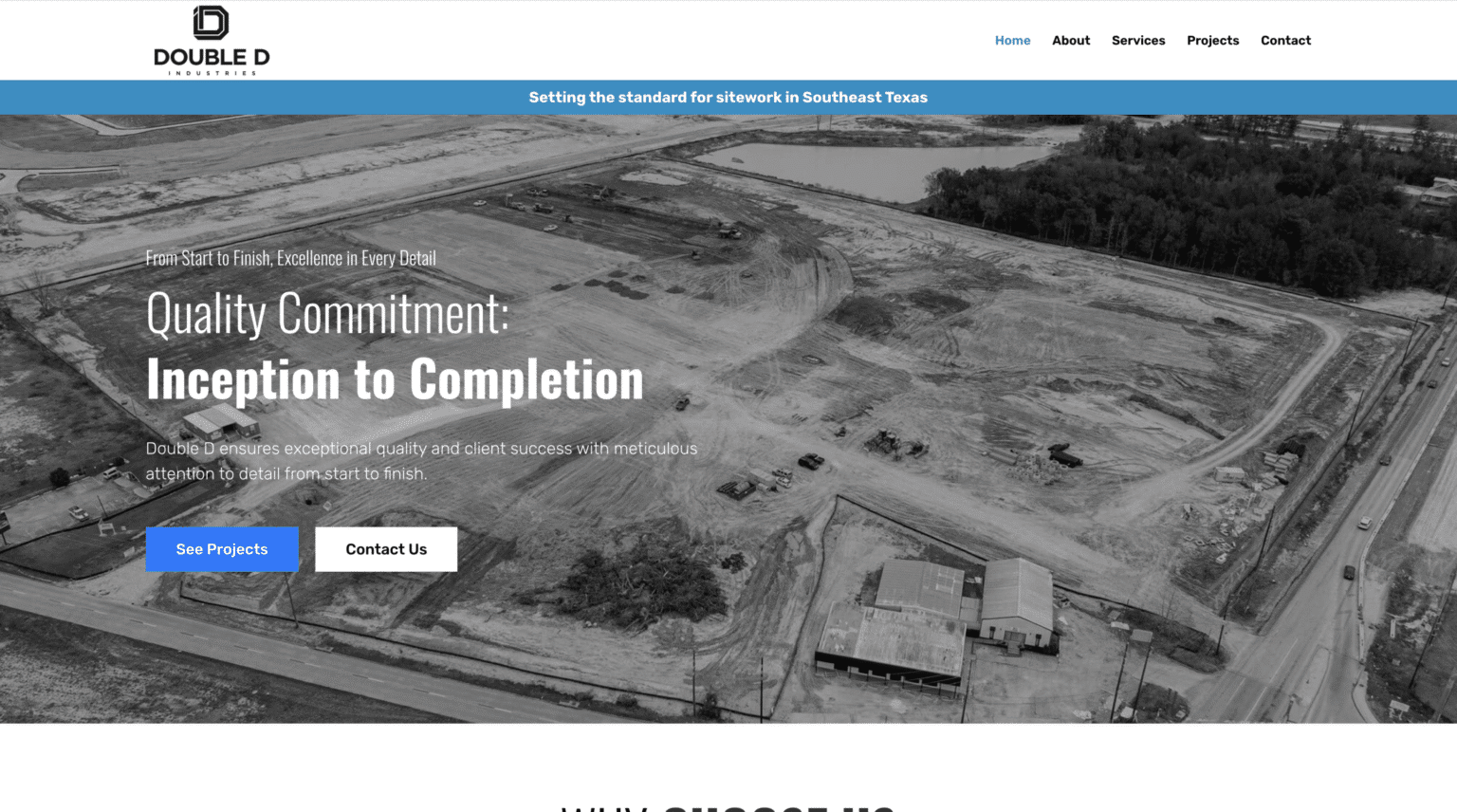
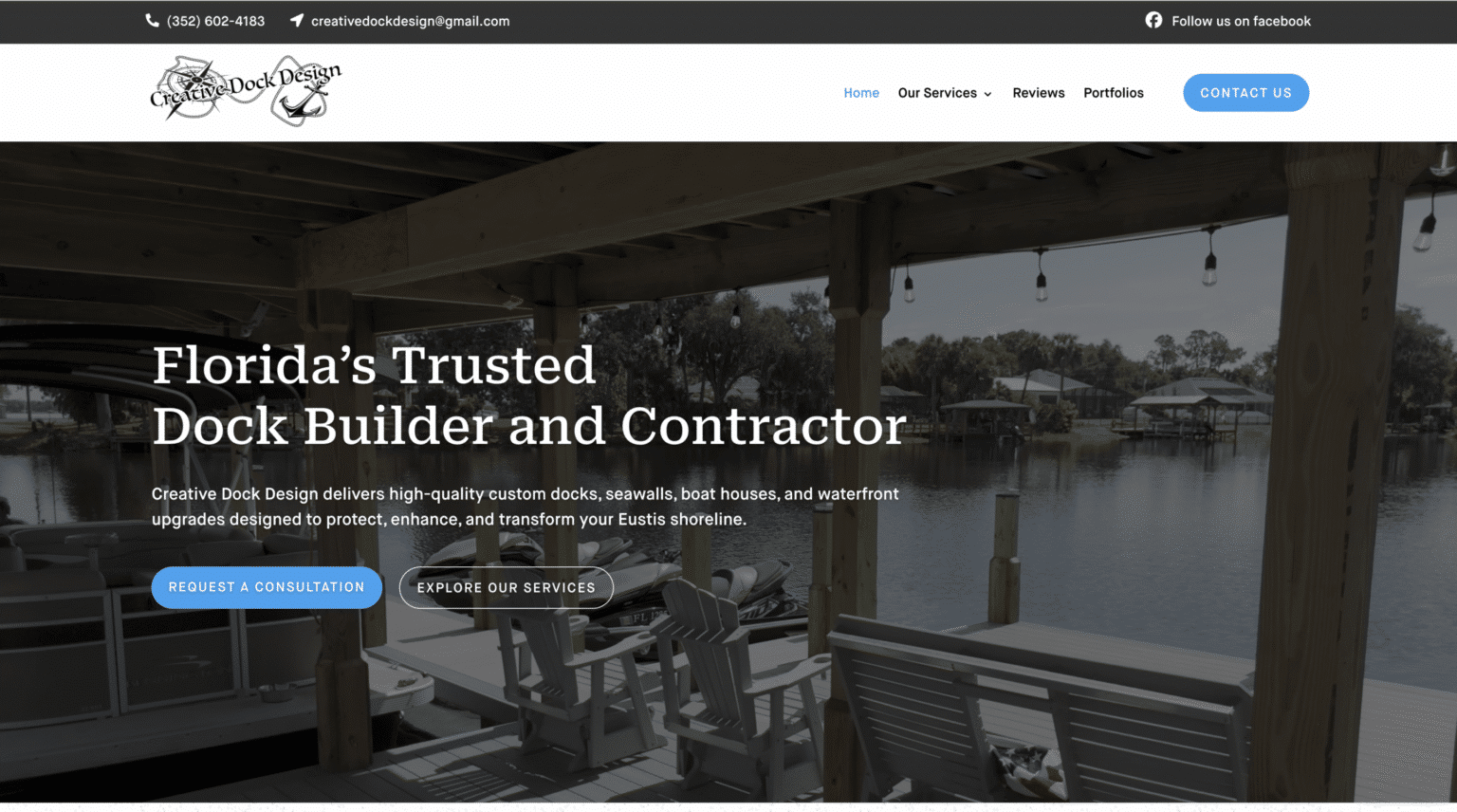
A good web designer for contractors can build something that looks polished, feels more tailored to your market, and removes a lot of the burden from your plate. If you have specific needs, such as presenting remodeling portfolios properly or organizing multiple service lines like kitchens, baths, additions, and flooring, a freelancer may give you a much stronger site than a DIY builder without agency-level pricing.
At the same time, freelancer projects vary wildly in process and support. Some are excellent during the build and disappear after launch. Others stay available for edits but charge by the hour. Some include copy guidance. Some expect you to provide every word and image. Some help with the practical parts of launch, while others hand you files and move on.
That inconsistency is why so many contractor website redesign projects start with the same backstory: the original freelancer was talented, but there was no long-term support plan. Months later, the site needs updates, the owner cannot get a response, and small issues start piling up.
A freelancer is often a smart fit when you want better quality than DIY, need a custom touch, and are comfortable asking detailed questions before you sign. The quality gap between a mediocre and excellent freelancer is huge, so the vetting matters as much as the price.
Agencies: the most structured option, and the most expensive upfront
Agencies usually enter the picture when the business wants a more complete process, more stakeholders are involved, or the website has to do more than simply exist. Current pricing in the market often lands around $15,000 to $50,000 or more upfront.
That number can cause sticker shock, especially for a contractor used to thinking in practical, production-driven terms. But agency pricing usually reflects a broader scope. Professional builds can involve strategy, design, development, and copy, not just page assembly. Timelines also tend to be longer. A professional website project commonly includes a discovery and planning phase that can run one to three weeks before execution even begins. Fully custom websites with more advanced functionality, design, and content creation may stretch into one to six months.
For some businesses, that level of process is justified. If you are rebranding, adding locations, restructuring service lines, or trying to make the site a serious lead-generation asset, an agency may bring useful depth. Agencies also tend to have more formal workflows, learn more which can help when multiple people on your team need input.
The catch is that not every contractor needs an agency build. If your company simply needs a strong, trustworthy local presence and a smoother way for homeowners to contact you, an agency can be overkill. There is nothing wrong with that. Not every website problem requires the most expensive remedy.
I have seen remodeling companies pay for a high-end build when what they really needed was better photos, sharper messaging, and consistent follow-through after launch. If those basics are missing, a big budget does not rescue the site.
Managed website subscriptions: a different way to buy the same essential outcome
Managed website subscriptions have become appealing for contractors because they solve a common operational problem: the website is important, but nobody on the team wants to babysit it.
In a managed setup, the monthly fee often bundles the technical and support side of the website into one service. Managed hosting typically means the provider handles tasks such as backups, security, performance-related setup, server configuration, updates, and monitoring. For a business owner, that changes the burden of ownership dramatically. Instead of worrying about maintenance and troubleshooting, you are paying for the website to stay looked after.
A managed website for small business can also include edits and support under one recurring price, depending on the provider. That predictability matters for contractors who hate surprise invoices for every text change or photo swap.
This is also the category where many business owners need to slow down and read carefully. Managed service reduces maintenance burden, but it can also limit server-level control. That is not automatically bad. For plenty of contractors, reduced control is a fair trade for reduced hassle. The key is understanding the arrangement before signing, especially who owns the site and content, what happens if you cancel, and how post-launch support works.
One example in this space is Scalable Websites, a Houston-based company serving contractors nationwide. It positions itself as a professionally designed website subscription that includes hosting, security, unlimited updates, and a dedicated project manager, with most sites launching in days. Whether that model is right for a specific company depends on preferences around ownership, flexibility, and budget, but it shows why managed subscriptions are gaining traction with home service businesses. They align with how many contractors prefer to buy services: fixed monthly cost, clear scope, less technical responsibility.
What each option really buys you
The cleanest way to compare these paths is to think less about design style and more about workload transfer.
| Option | Typical cost range | Best fit | Main trade-off | | --- | --- | --- | --- | | DIY builder | Starting around $17/month | Very small budget, simple needs, owner willing to do the work | Lowest cost, highest time burden | | Freelancer | Roughly $2,000 to $10,000+ | Contractors who want a more tailored site without agency pricing | Quality and support vary a lot | | Agency | Roughly $15,000 to $50,000+ upfront | Businesses needing strategy, custom work, and a formal process | Highest upfront cost | | Managed subscription | Monthly recurring service, scope varies by provider | Owners who want design plus ongoing support with less maintenance burden | Less server-level control in many setups |
That table simplifies a messy market, but it captures the core truth. You are not only buying pages on a screen. You are buying a mix of expertise, speed, accountability, support, and peace of mind.
Why specialty contractors should be careful with cheap shortcuts
Not all contractor niches are equally easy to present online.
A basic handyman site can often get away with a broad template and a short service list. That is not always true for more specialized categories. Pool screen enclosure website design needs visual credibility because homeowners want to see fit, finish, and local style. Concrete coating website design and epoxy flooring website design rely heavily on surface visuals, process clarity, and trust around durability. Mold remediation website design has to communicate seriousness, safety, and professionalism in a way that generic templates often miss. Flooring contractor website design needs to handle both inspiration and practical buying questions. Dock builder website design may need to reflect geography, water exposure, and custom work.
This is where the “cheapest possible” approach can backfire. If the site looks generic, homeowners assume the business may be generic too. That is not always fair, but it is how buyers behave. They fill in gaps with assumptions.
A good website does not need to be flashy. It needs to feel specific. Specificity is what separates a real local expert from another name in the search results.
When a contractor website redesign is worth the money
A lot of businesses do not actually need a first website. They need a contractor website redesign.
That can be the smarter investment when the existing site is outdated, underperforming, tied to a rebrand, or built on a system that no longer serves the business well. The key point is that redesign should be tied to business impact, not just appearance. A prettier site that still confuses visitors is not a win.
Sometimes the signs are obvious. Your phone number is hard to find. Your gallery looks old. Your services have changed but the site still reflects work you no longer pursue. The site is difficult to edit. It loads, but nobody on the team wants to touch it. In other cases, the issue is more subtle. The site looks acceptable, yet it does not generate many leads because the message is vague and the trust signals are weak.
A redesign makes sense when you want the website to reflect where the company is now, not where it was three years ago.
Questions that save contractors from expensive mistakes
Before you choose any provider, get clear answers to a handful of practical points. Contractors often focus on the homepage mockup and forget the ownership and support questions that matter more six months later.
- What is the pricing model, upfront project fee, monthly subscription, or both?
- Who owns the site and content after launch?
- Are hosting, security, backups, and ongoing updates included?
- What support happens after launch, and how are edits handled?
- If you leave, what exactly goes with you?
Those questions sound basic, but they expose major differences fast. Two providers can quote similar monthly numbers while offering very different levels of service and control.
Which route fits which kind of remodeling business
A small remodeling company just getting established may do perfectly well with a DIY platform, especially if the owner writes clearly, has strong photos, and only needs a simple presence. It is not glamorous, but it can be practical.
A growing business with steady work and no time to wrestle with site edits may be better served by a freelancer or managed subscription. The deciding factor is often whether the owner wants a one-time build or an ongoing service relationship.
A larger or more complex company, especially one rebranding or coordinating multiple internal decision-makers, may benefit from an agency process. The cost is higher, but so is the structure.
If you are comparing the best website builder for contractors to hiring a web designer for contractors, think about time first. Not just launch time, but your time. If the builder saves cash but drains owner bandwidth, it may not be the bargain it appears to be.
A practical way to decide without overthinking it
If you are stuck, use a simple filter. Decide whether your business needs cheap and fast, tailored and affordable, deeply strategic, or fully managed.
- Choose DIY if your budget is very tight and your website needs are simple.
- Choose a freelancer if you want a better result without agency pricing.
- Choose an agency if the website is a major business initiative with custom requirements.
- Choose managed subscription service if you value ongoing support and want less technical responsibility.
- Choose redesign over starting from scratch when the core issue is performance, not mere existence.
That is the decision framework most contractors actually need. Not endless jargon, just an honest match between budget, growth stage, and tolerance for managing details.
The smartest website investment is the one you will actually use
The best website for a contractor is not necessarily the cheapest, the fanciest, or the most custom. It is the one that gets launched, stays current, supports the business, and does not become a neglected side project.
A home remodeling website design should make it easy for a homeowner to understand what you do, trust your work, and contact you. Everything else is secondary. If a $17-per-month builder can accomplish that for where you are right now, fine. If your business needs a stronger message, better support, and someone else to handle the technical upkeep, spending more can be the cheaper move over time.
Website cost is really a proxy for responsibility. The less you pay, the more you usually own in labor and maintenance. The more you pay, the more work gets transferred to someone else. Once you see the decision that way, the pricing starts to make sense.
And it becomes much easier to choose the option that fits your business instead of chasing the one that merely sounds affordable.