How to Get More Leads for Contractors in 2026 With Local SEO, Google Business Profile, and Fast Mobile Pages
Most contractors do not have a lead problem in the abstract. They have a visibility problem, a trust problem, or a response problem.
A plumbing company can do excellent work and still lose jobs because its Google Business Profile is half-finished, its website takes too long to load on a phone, or the visitor who needed help at 7:10 a.m. Had to hunt for a phone number. An electrician can rank for a branded search and still miss local intent because the service pages are thin or the service area is unclear. A remodeling company can have beautiful project photos and still get fewer calls than a less polished competitor that simply made it easier to book.
If you want a practical answer to how to get more leads for contractors in 2026, the foundation is not mysterious. Start with the channels that already shape local buying decisions: Google Business Profile, local SEO for home service businesses, and a contractor lead generation website that works especially well on mobile. Then make sure every inquiry gets handled quickly, because lead generation and lead capture are not the same thing.
The shortest path to better lead flow
For home service and trade businesses, local lead generation usually gets strongest when three pieces work together.
Your Google Business Profile helps people find you when they are searching in-market. Your website answers the next set of questions, usually around services, location, trust, and how to contact you. Your mobile experience decides whether that visitor becomes a caller or disappears back to search results.
That sequence matters. A lot of owners spend months tweaking logos, rewriting taglines, or chasing broad rankings while the simpler wins sit untouched. In practice, the fastest gains often come from cleaning this website up the profile, tightening the service pages, and making the phone path obvious on mobile.
Google’s own guidance supports this direction. Service-area businesses can set a service area instead of showing a storefront address. Verified profiles can display reviews, and businesses can read and reply to them. For Local Services leads, calls and message requests can both matter, and business hours are pulled from the Google Business Profile. Google Search guidance also strongly supports mobile-friendly pages and the mobile version of a site.
That is enough to shape a smart 2026 playbook without guessing.
Why Google Business Profile comes first
For many contractors, the profile is the front door, not the website homepage.
When someone searches for a roofer, plumber, electrician, or water damage company, they often see the profile before they ever visit the site. That profile gives them a quick decision frame: are you nearby, are you open, do you serve my area, do you look active, and do real customers say good things?
If you are a service-area business, you do not need to force a storefront setup that does not match reality. Google allows eligible businesses to list service areas instead of a public address. That matters for contractors who work out of a home office, dispatch from trucks, or cover multiple neighboring cities from one base.
There are also practical implications that get overlooked. If your hours are wrong, you can lose urgent calls. If your main category is off, you can become less relevant for the searches you actually want. If your service area is vague, you invite wasted inquiries from places you do not serve while also making it harder for nearby prospects to feel certain you cover their neighborhood.
A good Google Business Profile for contractors is not just “claimed.” It is complete, accurate, and maintained.
What to tighten on the profile this month
- Make sure the business hours reflect reality, especially if your team answers emergency or after-hours calls.
- Use the most accurate primary category and fill out the service area if you operate as a service-area business.
- Verify that the phone number is answered consistently and connects to the team handling inbound leads.
- Review the public-facing details the way a homeowner would, not the way an owner would.
- Reply to reviews, because they are part of the trust story prospects see before they contact you.
None of that is glamorous. It is also where many local wins come from.
Reviews are not a side task
Contractors often talk about reviews as reputation management, but in local search they also function as conversion assets.
A verified profile can surface customer reviews, and prospects can read them before they ever speak to you. That means reviews influence both visibility and confidence. A sparse review profile does not automatically mean you cannot generate leads, but it usually makes every click work harder. A healthy stream of recent feedback makes the business look active, established, and responsive.
The important part is not to turn review generation into a robotic script. Homeowners can smell that from a mile away. The best review habits are simple and consistent. Ask after the work is complete and the customer is genuinely satisfied. Make it easy for the customer to follow through. Then reply to what they wrote in a way that sounds like a real business owner, not a template.
This matters even more in trades where urgency and trust collide. Water damage restoration website design, for example, has to support emergency action, but the profile has to carry trust at the same time. If a family is dealing with a flooded room, they are moving fast. Reviews become one of the quickest trust signals available.
The same pattern shows up in plumbing, electrical, and foundation repair. A prospect may only spend a minute comparing options. Reviews can tip that minute in your favor.
Your website should support the profile, not compete with it
A contractor website that generates leads is not an online brochure with a few service blurbs. It exists to remove friction from the buyer’s next decision.
That sounds obvious, yet many sites are still built around what the owner wants to say first rather than what the prospect needs to confirm first. The prospect is usually asking a tighter set of questions: do you handle my problem, do you work in my area, can I reach you right now, and do you seem trustworthy enough to invite into my home?
Your site should answer those questions quickly.
One of the most effective ways to do that is to build dedicated service pages. Google can better connect those pages to local intent, and users can land directly on the service that matches their need. A page about drain cleaning speaks to a different visitor than a page about panel upgrades. A page about kitchen and bath remodeling website design needs a different tone and proof set than a page for emergency mitigation.
This is where generic websites usually fall apart. They lump everything into one services page, spread across several counties, with one stock paragraph per trade. That weakens both local SEO for home service businesses and conversion.
A stronger setup is more specific. If you offer plumbing, create pages that reflect actual services customers search for. If you are in electrical, do the same. If you specialize in foundation repair, write with the seriousness that topic requires. The same goes for fence contractor website design, solar company website design, and other niche trade categories where the buying process has its own rhythm.
That does not mean stuffing keywords into every headline. It means aligning the structure of the site with the actual services people need.
The case for service-area pages, with restraint
Service-area pages can help, but only if they are grounded in reality.
A common mistake is creating dozens of near-duplicate city pages with only the place name swapped out. That usually reads poorly and often creates maintenance headaches. The better use of service-area content is to clearly explain where you work, how your service model operates, and which services are available in those areas.
For a service-area contractor, this often means combining a solid area overview with strong service pages rather than churning out thin location content. If you truly have distinct operations, crews, or local proof in several cities, then city-specific pages can make sense. If not, restraint is usually wiser.
The profile and website should also agree with each other. If the Google Business Profile says you serve certain areas, the site should reinforce that in plain language. Consistency helps users feel confident they are contacting the right business.
Fast mobile pages are not a technical luxury
Most contractor traffic that turns into calls starts on a phone. If the page feels slow, cluttered, or hard to use, the visitor often does not complain. They leave.
Google has long recommended mobile-friendly pages and strongly supports the mobile version of a site. For contractors, that guidance has direct revenue implications. The person looking for a plumber while standing in a wet kitchen is not settling in for a long desktop research session. The person comparing electricians from a driveway is not interested in an image-heavy hero banner that pushes the phone number below the fold.
Speed matters, but usable speed matters more. A technically decent page can still feel slow if the important actions are hidden.
What a fast mobile lead page needs
- A visible tap-to-call option near the top of the page
- Service and location clarity in the first screen or two
- Trust signals that load cleanly and do not crowd out the contact path
- Short, readable sections with no unnecessary detours
- A layout that works well with thumbs, not just with a mouse
A good contractor lead generation website often feels almost plain on mobile, and that is usually a compliment. It gets out of the user’s way.
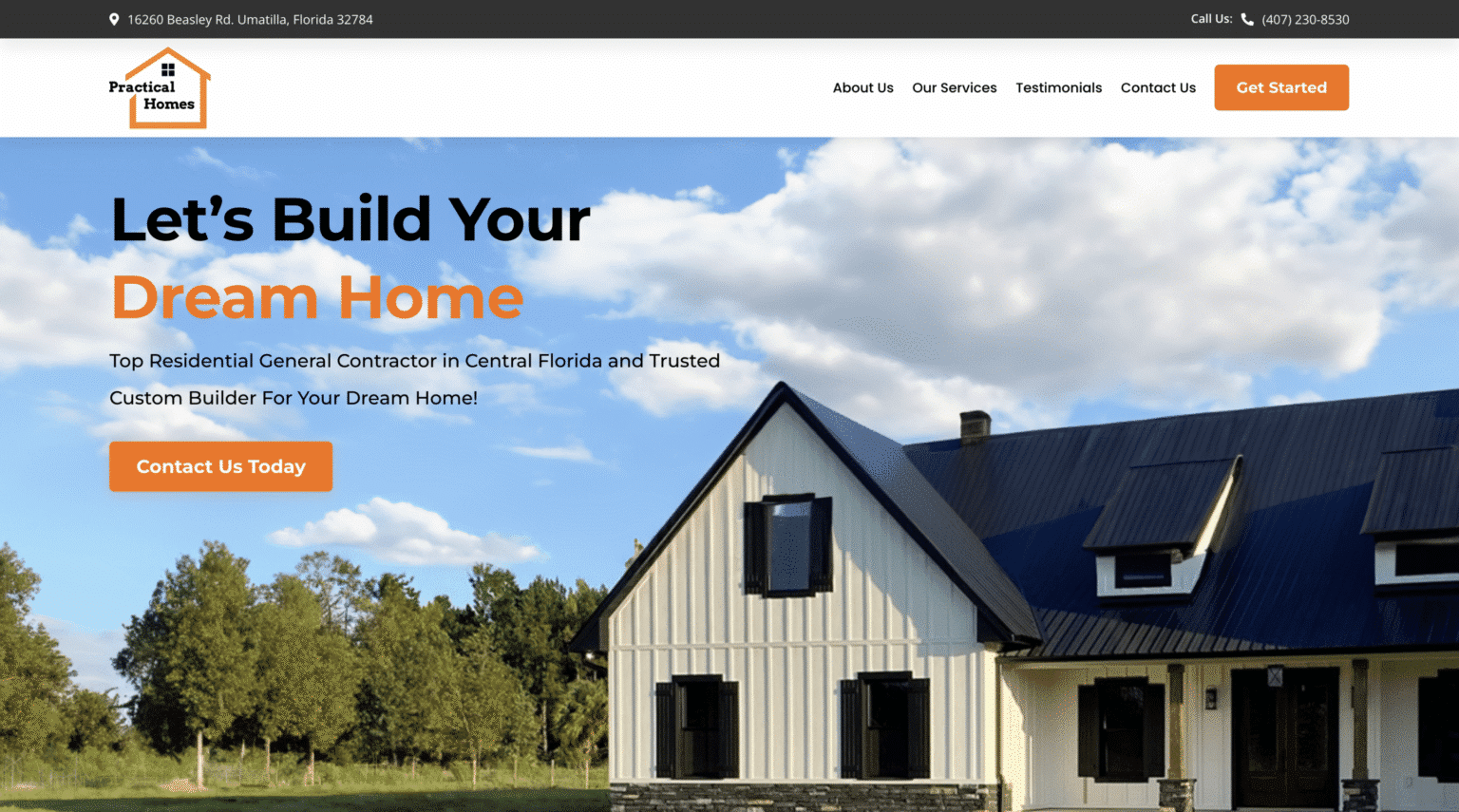
I have seen this issue in every category from plumbing website design to solar company website design. Owners sometimes assume that a more impressive-looking site will naturally outperform a simpler one. Not always. If the elegant design slows down the path to a call, the “nicer” site can produce fewer leads.
The trade-off is real. Branding still matters. Trust still matters. But for local service demand, especially on mobile, clarity and speed usually beat visual excess.
Design choices should reflect the trade
Not every contractor website should feel the same.
An electrician website design often needs to reassure homeowners about professionalism, safety, and responsiveness. A kitchen and bath remodeling website design usually carries a longer sales cycle, so the content can support more research and project consideration. A foundation repair website design needs calm, authority, and enough detail to reduce anxiety without overwhelming the visitor. A water damage restoration website design needs urgency, immediate contact options, and confidence under pressure.
Those are not cosmetic differences. They affect page structure, messaging, and what the visitor needs to see first.
Take fencing as another example. A fence contractor website design may need to show service types and local area coverage with straightforward contact options, because buyers often compare timelines, material options, and price expectations quickly. A solar company website design may require more explanation because the buying process can be less urgent and more consultative.
The mistake is using the same cookie-cutter template and simply swapping the logo and service name. That tends to flatten the business into something generic. A website should still follow local SEO and mobile best practices, but the buying context of the trade should shape the page.
Speed to lead decides whether traffic becomes revenue
Generating the inquiry is only half the work.
Google’s Local Services documentation makes it clear that leads can come through calls or message requests, and it also notes that missed calls are part of lead handling. That should get every contractor’s attention. You can do the hard work of earning visibility, invest in your Google Business Profile for contractors, build dedicated service pages, and still underperform because calls go unanswered or messages sit too long.
This is where many lead programs quietly fail. The marketing gets blamed when the operational issue is response speed.
If your profile is driving calls, the number must be monitored. If messages are enabled in the flows you use, they need a process. If calls are missed after hours, there should be a plan for calling back or otherwise recovering the inquiry as soon as possible. Fast follow-up is not a nice bonus in home services. It is often the difference between winning and losing.
Think of the full path. A homeowner finds the profile, sees solid reviews, lands on a fast page, taps to call, and gets voicemail. In that moment, your marketing did its job. The system around the lead did not.
Tracking matters, even if you keep it simple
A lot of contractors ask which channel is producing the best leads, but few have a clean answer.
You do not need a complicated dashboard to get more useful visibility into performance. What you need is discipline. Track which calls came from the profile, which leads came through the website, and which service pages are getting attention. Then compare that with closed jobs, not just raw lead counts.
This is especially important when you offer several services with very different sales cycles. Emergency-oriented pages may produce faster calls. Remodeling content may assist longer consideration. A solar page may generate fewer but more deliberate inquiries. Without tracking, owners often shift budget based on gut feel instead of patterns.
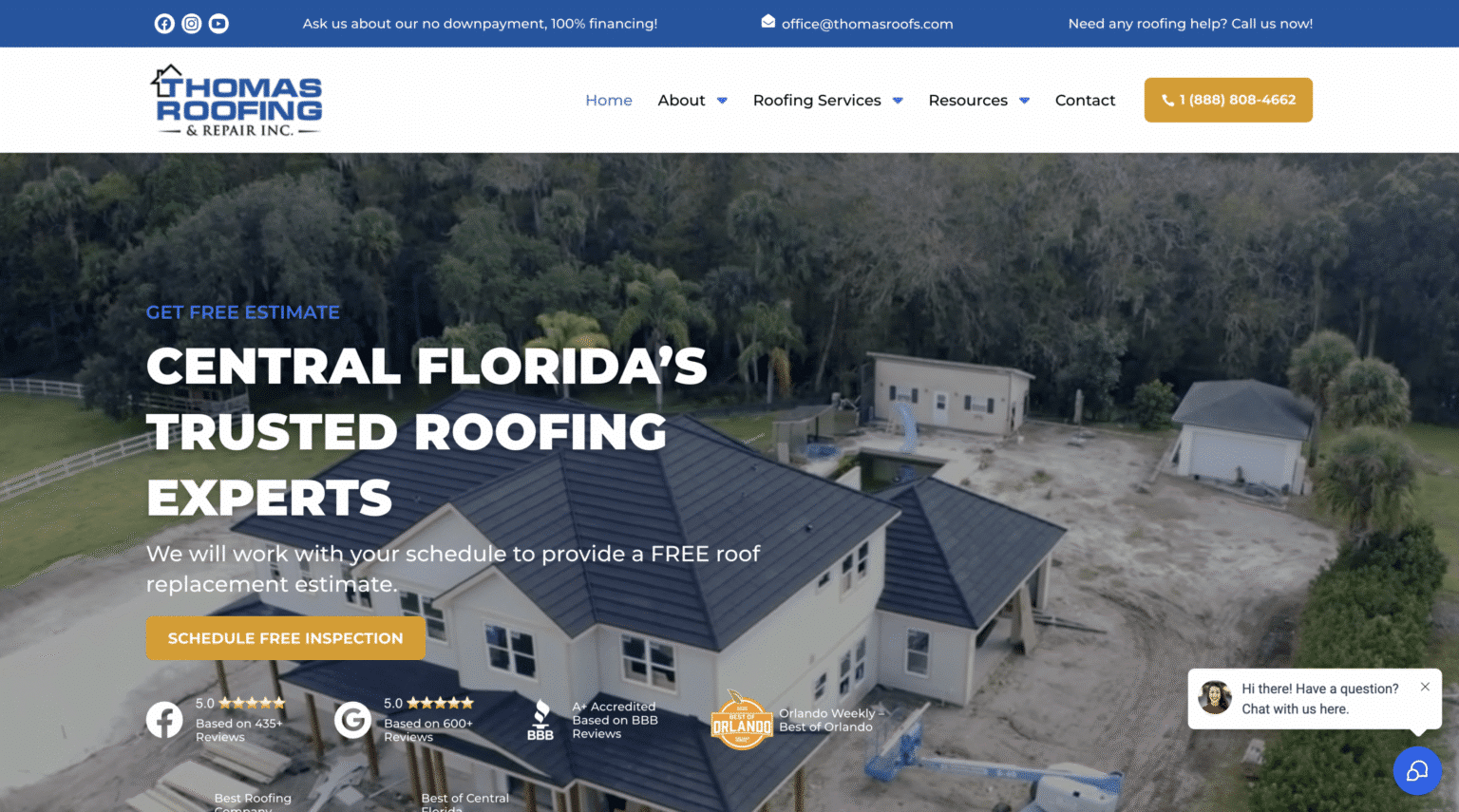
There is also a strategic benefit here. Once you know which pages and profile actions generate real opportunities, you can improve the weak points. Sometimes the best move is not “get more traffic.” Sometimes it is “make the strongest page easier to contact from a phone” or “clean up profile hours so urgent searchers stop bouncing.”
Where contractors usually waste effort
The most common waste is broad, vague marketing when local intent is already available.
A contractor serving a defined region does not need to act like a national brand. They need local relevance, service clarity, and a website that supports conversion. Yet many businesses still put energy into general awareness tactics while their local foundation remains weak.
Another waste is treating all traffic as equally valuable. It is not. A visitor who lands on a focused service page from a local search is very different from a casual browser. The website should be built to help the first person act immediately.
There is also a tendency to overbuild. Owners invest in long animations, oversized image sections, and copy that says very little. If your market is competitive, the site does need polish. But polish should help people trust you and contact you, not slow them down.
Finally, many teams neglect maintenance. A contractor website that generates leads is not a one-time project. Hours change. Service areas evolve. New reviews should be answered. Content should reflect the work you actually want more of. Unlimited updates and active management are valuable for that reason, whether handled in-house or through a partner.
A practical 2026 workflow
The businesses that improve lead flow fastest usually work in a simple sequence.

First, tighten the Google Business Profile. Make sure the service area, hours, category, and contact details reflect reality. Second, strengthen the website around dedicated service pages and a mobile-first experience. Third, build a steady rhythm for reviews and responses. Fourth, make sure inbound calls and messages are handled quickly. Fifth, track what turns into real jobs so you know where to double down.
That may sound basic. It is supposed to. Most lead growth for local contractors does not come from novelty. It comes from doing the obvious things unusually well.
A well-built profile, a focused local SEO structure, and fast mobile pages can create a durable advantage because they serve the way homeowners actually search and choose. Whether you are refining plumbing website design, improving an electrician website design, building out foundation repair website design, or revisiting a water damage restoration website design, the same rule applies: reduce friction between local intent and contact.
That is the core of how to get more leads for contractors in 2026. Be visible where people search, be credible when they check you out, and be easy to reach the moment they are ready.